Frame the real claim
Clarify what must be true for the idea to be worthwhile, rather than starting with a preferred solution.
IDEA TEARDOWN · PUBLIC SKILL
An evidence-first method for evaluating startup and app ideas before confidence becomes commitment
01 / THE CONTEXT
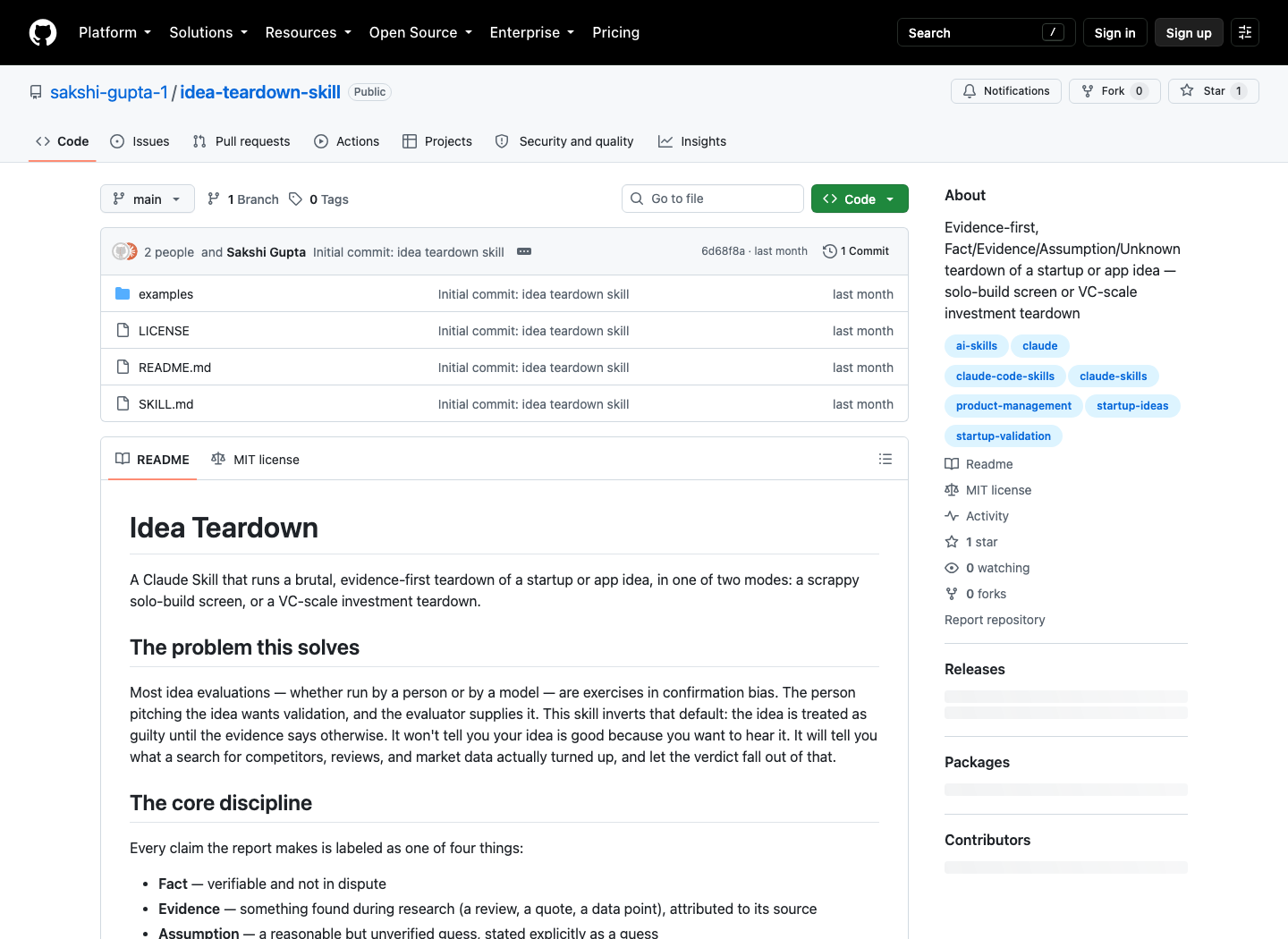
Idea Teardown treats the premise as unproven, researches the relevant market and competition, and names the evidence gap rather than smoothing it into a confident-sounding answer.
02 / THE METHOD
Clarify what must be true for the idea to be worthwhile, rather than starting with a preferred solution.
Look for competitors, user behaviour and constraints that could weaken the premise.
A narrow solo utility and a venture-scale company have different pass criteria and verdicts.
End with the cheapest practical action that could meaningfully change the decision.
03 / EVIDENCE IN PRACTICE
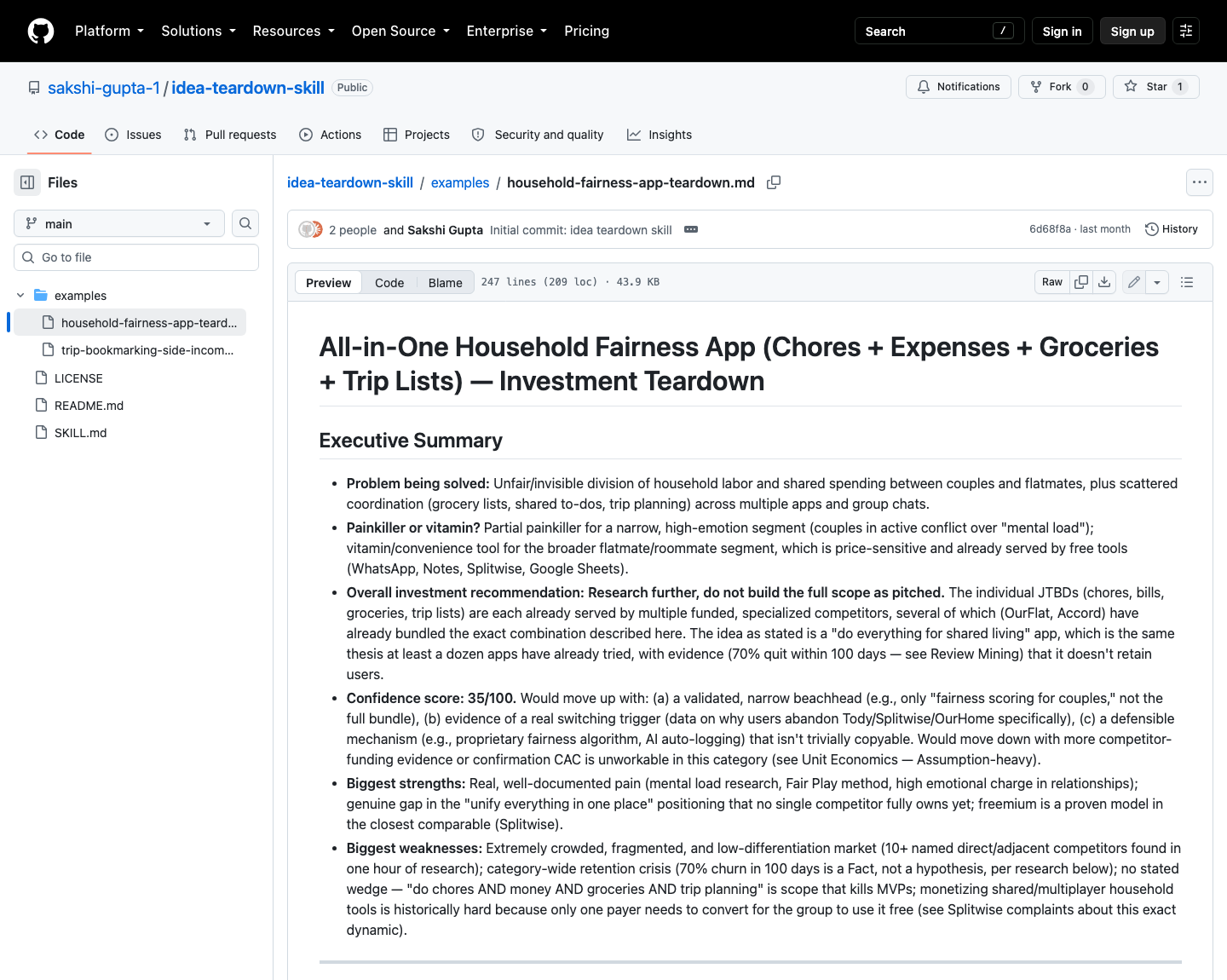
The public repository contains the skill, its method and two complete generated examples. The published household-fairness teardown demonstrates the skill making a “research further” recommendation rather than validating the pitch.
04 / PRODUCT JUDGMENT
A narrow app can be a sensible solo project without being venture-scale. A big market can be a credible investment without being a worthwhile side build.
The output identifies the riskiest assumption and proposes a test that can change the decision before a larger commitment is made.
05 / WHAT I LEARNED
“The most useful early feedback is whether the evidence survives the question it is avoiding.”